
9 Online Review Management Tools For 2026


Think back to your most recent purchase. Chances are, you didn’t just look at the product—you looked for proof. In 2026, that "proof" has become the primary currency of the digital economy.
While nearly 95% of online shoppers still browse customer reviews before hitting "buy," the way those reviews work has fundamentally shifted. They are no longer just for human eyes; they are the high-priority trust signals used by AI search engines and Large Language Models (LLMs) to decide which brands to recommend.
The New Search Reality
In this "AI-first" era, maintaining a solid online presence is about more than just a high star rating. Generative AI systems like Gemini, ChatGPT, and Search Generative Experience (SGE) actively scan the sentiment and specific keywords within your reviews to categorize your brand’s reliability.
The AI Stakes: A single cluster of unaddressed negative reviews doesn't just deter a customer—it can teach an AI model that your brand is "unreliable," causing you to vanish from automated recommendations and AI-driven "best of" lists.
Why Review Management is Your New Infrastructure
This is where modern online review management software becomes essential. It’s no longer just a digital filing cabinet; it’s your Reputation Infrastructure. These tools now help you:
- Feed the Machine: Collect high-quality, text-rich reviews that AI models use to understand your product's specific strengths.
- Monitor Sentiment at Scale: Use AI to catch shifts in customer mood across dozens of platforms before they become a "narrative" that sticks.
- Automate Authenticity: Simplify the process of gathering video and written testimonials that prove to both humans and bots that your brand is the real deal.
If you want to protect your standing in a world where AI is the new gatekeeper, we’ve rounded up the top online review management tools of 2026. These platforms will ensure your brand isn’t just seen—it’s trusted.
9 Online Review Management Tools For 2026
With numerous alternative solutions available, finding the perfect tool for your needs can be challenging. To help you control your business's online reputation, we've curated a list of the top 9 review management software options.
1. Trustmary
Trustmary's primary mission is to make the true customer voice visible not just to people, but to AI search engines and LLMs (like ChatGPT and Gemini).
AI visibility starts from a good customer experience and authentic customer reviews that are made readable to AI tools. We help you collect, analyze and showcase customer reviews automatically to ensure this process runs smoothly.
The tool is designed for scale—serving everyone from solo entrepreneurs to mid-market leaders. Its "3-in-1" survey approach allows businesses to measure satisfaction, gather open feedback, and collect public reviews simultaneously, maximizing the value of every customer interaction.
Key Features
- AI Visibility Optimization: Automatically formats and highlights your reviews so they are easily indexed and cited by AI search engines and LLMs.
- 3-in-1 Smart Surveys: A single branded survey that simultaneously captures NPS/CSAT metrics, written feedback, and public-facing reviews (text or video).
- Automated Review Workflows: Advanced trigger-based automation that sends requests via email or SMS based on specific customer milestones.
- AI Insights & Sentiment Analysis: Real-time dashboards that use AI to categorize open feedback and identify emerging trends or potential churn risks.
- Dynamic Review Widgets: High-converting widgets that automatically filter and show the most relevant reviews based on the specific page or visitor segment.
- Review Aggregation: Import your existing customer reviews from platforms like Google Maps, Facebook, Yelp, and more, into one simple dashboard.
- Lead Generation Tools: Integrated pop-ups, social proof notifications, and chatbots that turn review-browsing visitors into active leads.
- Direct CRM Integrations: While Zapier is still an option, Trustmary now offers deeper native integrations for HubSpot, Pipedrive, and QuickBooks for seamless data syncing.
Pros & Cons
Pros
- Future-Proofing: Specialized tools to help your brand get mentioned in AI search results.
- High Response Rates: Surveys are optimized for mobile and typically see 2x–4x higher completion rates than traditional tools.
- Centralized Management: Manage Google, Facebook, Trustpilot, and video reviews from one "Online Reputation" dashboard.
- Conversion Focused: Includes built-in A/B testing for widgets to see which social proof drives the most sales.
Cons
- Usage-Based Scaling: Costs can rise quickly for high-traffic websites as pricing is tied to "Widget Views."
- AI Features Premium: Some of the advanced AI visibility and "White Label" features require higher-tier add-ons.
Pricing
Trustmary works on a value- and usage-based "Build Your Plan" model to offer more flexibility. Prices start at $19/month for basic display features and scale up as your needs grow.
Check the updated pricing information here.
Trustmary is not just a review tool, but a comprehensive customer experience management software + CSAT software combined.
2. Birdeye
Birdeye is an all-in-one CX platform built for enterprise and multi-location organizations. Birdeye helps brands manage online reviews and customer experience at scale through a single, integrated platform. Trusted by the biggest brands globally, Birdeye unifies review management, listings accuracy, social engagement, messaging, surveys, and AI-driven search visibility into one system.
By replacing fragmented tools with centralized automation, Birdeye enables enterprise teams to standardize workflows, maintain brand consistency, and act on customer feedback across 10-10,000+ locations. With support for 200+ review sites and 3,000+ integrations across CRM, EMR, POS, and marketing systems, it delivers the control, governance, and efficiency large organizations require.
Key Features
- Unified review management: Monitor, respond to, and analyze reviews across 200+ sites, including Google, Facebook, Yelp, and Healthgrades.
- Review Generation Agent: Sends review requests via SMS or email at the right moment.
- Review Response Agent: Auto-drafts on-brand replies based on sentiment and urgency.
- Listings AI & Optimization Agent: Fixes duplicates, fills gaps, and updates listings across Google, Apple, Yelp, and directories
- Search AI: Tracks AI search visibility, sentiment, and citations.
- Social & Messaging Agents: Publish localized social media posts and manage comments and conversations.
- Enterprise controls: Role-based access and approvals.
- 3,000+ integrations: Sync CRM, EMR, POS, and marketing tools
Pros
- Designed to manage reviews, listings, and engagement across hundreds or thousands of locations.
- AI agents automatically execute review requests, responses, listing updates, and engagement tasks.
- Replaces multiple tools with one platform for visibility and governance.
- Supports 200+ review sites and integrates with 3,000+ systems.
- Built to support approvals, permissions, and compliance requirements.
Cons
- Feature depth introduces a learning curve for new users
- Though some niche tools aren't directly integrated, Birdeye’s ecosystem of over 3,000 integrations automates workflows and supports custom connections.
Pricing
Birdeye offers custom, value-based pricing based on the number of locations, selected features, and automation needs. Pricing is provided after a demo to ensure alignment with enterprise requirements.
Looking for Birdeye alternatives? We've got you covered!
3. Podium
If you aim to enhance your local SEO presence, Podium is the perfect tool for you. This all-inclusive platform offers a suite of tools tailored for small businesses.
Specifically designed to aid local businesses, Podium is geared towards garnering more customer reviews for small businesses, thereby elevating their rankings in local search results.
All reviews are consolidated into a central dashboard, streamlining the process. You can automate review invites and monitor your reputation and ranking across various platforms, including Yelp, Google Business, and Facebook.
Key Features
- Unified Dashboard: Offers businesses a single dashboard to oversee all online reviews, social media mentions, and customer interactions.
- Automated Review Requests: Easily automate the process of requesting reviews from customers through text messages and email.
- Sentiment Analysis: It analyzes the sentiment of online reviews and social media mentions, providing insights into how customers perceive your brand.
- SMS Marketing: Send targeted promotions, updates, and reminders directly to customers’s mobile phones for high engagement.
Pros
- Access and manage reviews conveniently on the go with Podium's mobile app.
- Enjoy effortless navigation and usability, making it a breeze to find your way around.
- Effortlessly manage responses to online reviews and social media mentions from various sources.
- Webchat features let you chat with customers in real time, adding that personal touch to your interactions.
Cons
- The review request feature relies solely on SMS, potentially excluding those who prefer other communication channels.
- Lack of customizable reporting options may restrict access to valuable insights tailored to specific business needs.
- Pricing might be steep for smaller businesses or startups, posing a potential barrier to entry.
Pricing
Podium doesn't offer a free trial. Pricing is tailored after a demo call.
- Core Plan: Starts at $399/ month.
- Pro Plan: Begins at $599/month.
- Signature Plan: Custom pricing is available upon request.
4. Reputation.com
Reputation addresses feedback across the entire customer journey, offering in-depth surveys and a Review Booster feature. This feature can boost review generation by up to 40%, converting survey responses into ratings and reviews on platforms like Google and TripAdvisor.
Unlike competitors, Reputation caters specifically to large enterprises with extensive online presence.
Key Features
- Multi-channel Feedback: Listen everywhere you are online, gathering feedback from review sites, social media, and more, giving you a complete picture of your online reputation.
- Brand Monitoring: Monitor your brand across platforms like Google My Business and Facebook.
- Performance Benchmarking: Assess your performance against industry standards.
- AI-Based Insights: Predict consumer expectations using location-based insights.
- Comprehensive Performance Management: Oversee reputation performance from the organizational level down to individual locations, both online and offline.
Pros
- Beyond review management, Reputation offers social media monitoring capabilities.
- Their Sentiment Map feature allows for in-depth analysis, unveiling trends and patterns in brand sentiment.
- With Review Monitor, easily track customer feedback across numerous third-party websites and streamline response efforts using provided templates.
- Enjoy commendable customer service, particularly from their dedicated account representatives.
- Benefit from advanced NLP (Natural Language Processing) and analysis features.
- Get the full scoop on your brand's rep with Reputation. They mix your internal data with information from many external sources, giving you a real-time 360º view of how your brand is perceived in the market.
Cons
- You gotta pay for another tool just to reply to reviews in the dashboard.
- Limited engagement functionalities, potentially hindering interaction with customers.
- Lacks features for creating content, limiting options for brand promotion and communication.
Pricing
The website doesn't provide pricing specifics. For more information, you’ll need to contact their sales team directly.
5. Yotpo
Yotpo is a go-to content marketing platform tailored for e-commerce ventures. It solicits feedback and referrals by facilitating review collection through email and SMS channels.
Their reporting and analytics tool offers in-depth insights into customer sentiment and allows you to track the influence of reviews on conversion rates.
Additionally, Yotpo seamlessly integrates with major e-commerce platforms like Shopify, Magento, BigCommerce, and WooCommerce.
Key Features
- Product-Specific Requests: You can target customers for opinions on specific products, not just general feedback about your brand.
- Customization: Make your feedback requests unique by adding personalized questions and messages.
- Visual Reviews: Customers can jazz up their reviews with images and videos, adding extra flair.
- Auto-Moderation: No need to stress about managing reviews manually—Yotpo's got automated moderation and spam filters to keep things in check.
- Insightful Analytics: Get the lowdown on customer behaviour with their nifty analytics dashboard.
Pros
- Yotpo teams up with heavy hitters like Facebook and Google, giving your business some serious credibility.
- It's not just about reviews—Yotpo also hooks you up with loyalty programs and SMS marketing.
- Their rewards program option amps things up, encouraging more interaction and involvement from your customers.
Cons
- The reporting system might not be super intuitive for everyone
- Some users find the setup process a bit challenging to tackle.
- The pricing might be a tad high for small businesses or those just starting out in e-commerce.
Pricing
Pricing Tiers: Choose from Starter, Pro, or Premium modules. With commercials starting from $79 per month for up to 500 orders.
6. ReviewTrackers
Review Trackers is hailed as the top-notch, dependable choice for managing reputations across businesses of any size and scale. It analyzes real customer review data, providing actionable insights to help businesses identify opportunities for enhancing customer experience, service quality, and product performance.
With integration across 90+ online review platforms like Yelp, TripAdvisor, and Trustpilot, it monitors public feedback. This means you'll always know what customers are saying about your brand across all locations, with daily email notifications for updates.
Plus, ReviewTrackers offers a responsive feature to address every customer's feedback promptly.
Key Features
- Media Monitoring: Monitor media channels for mentions of your brand.
- API Integration: Seamlessly integrate with other tools through an API.
- Performance Analytics: Dive deep into detailed analytics to track your review performance.
- Unlimited Users: Bring your entire team on board with no user limits.
- Custom Reporting: Create custom reports tailored to your needs.
- SMS Review Requests: Reach customers directly and boost reviews with convenient text message prompts.
- Competitor Tracking: Stand out in local and regional markets by automatically analyzing your competition.
Pros
- Automatically sorts reviews so you can focus on the good, bad, or neutral ones.
- Spots trends and patterns in customer feedback using natural language processing.
- Ideal for businesses with multiple branches, making it easy to manage reputation across the board.
- Their reputation management solutions are geared towards making customers happy.
Cons
- Support for monitoring niche review platforms might be limited, leading to potentially incomplete data collection for certain industries.
- While they offer sentiment analysis, for super precise results, you might need more specialized tools.
Pricing
The pricing varies based on the number of locations you want to monitor, beginning at $119/month per location on an annual subscription.
7. Grade.us
Grade.us is the perfect white-label review management platform for marketers and agencies. It offers ample flexibility to personalize and showcase reviews on your website by customizing it with your own branding elements.
The platform seamlessly integrates with various third-party platforms and sales CRMs, such as Salesforce, Quickbooks, and Zapier. However, being white-labeled, it may be more suitable for medium to larger businesses.
Key Features
- Review Monitoring and Response: No more scrambling to find customer feedback – Grade.us brings it all to you in one place.
- Review Widget: Turn reviews into conversions. Showcase your happy customers with a sleek review widget.
- Mobile Compatibility: Monitor reviews, respond to feedback, and manage your online reputation on the go.
- White Labeling: Customize the platform under your own branding.
- Personalized Messaging: This lets you tailor your review responses for each customer, creating a more genuine connection.
- Automatic Publication: Put your best foot forward by automatically showcasing your most glowing customer testimonials where they matter most.
Pros
- Dive deep into customer feedback with targeted surveys, keeping your insights fresh.
- Round-the-clock monitoring of reviews across search engines and social media.
- Easy team collaboration. Track how your team members handle online posts, keeping everyone on the same page.
- Instant Alerts. Stay in the loop with automated alerts whenever new reviews pop up.
Cons
- Restricted support hours could make it a bit tricky to get assistance when you need it.
- The cost might be steep for small businesses, and watch out for additional charges for integrations.
Pricing
Enjoy a free 14-day trial, with small business subscriptions starting at $110 per month.
8. Trustpilot
As a top player in the online review space, Trustpilot equips businesses with the means to establish trust and transparency with their clientele.
It champions open communication and nurtures a trustworthy community between businesses and their customers. With seamless integration of widgets and APIs, Trustpilot effortlessly displays real-time customer feedback on websites, putting customer sentiments in the spotlight.
Key Features
- All-in-One Review Management: Effortlessly manage, respond, and track customer reviews all in one place.
- Review Widgets: Show off your best reviews with customizable widgets on your website
- Referral Management: Manage referral programs for customer acquisition.
- Analytics Dashboard: Track performance and review trends.
Pros
- Easily syncs with various platforms like Zendesk, Magento, Salesforce, and more, making your workflow smoother.
- As a Google review partner, Trustpilot gives your brand added credibility.
- Offers advanced customer insights through in-depth statistical breakdowns.
- Small brands can kickstart their review management journey without breaking the bank with Trustpilot's free plan, packed with essential tools.
Cons
- Review widgets might lack personalization and mobile optimization features.
- Some users find it tricky to manage or remove inaccurate reviews.
Pricing
You can get started with plans at $259 per month for each domain.
Looking for Trustpilot alternatives?
9. Broadly
Broadly is a review and reputation management tool tailored for small service-oriented businesses. It helps boost local businesses' online presence and enhances search rankings through SEO.
With Broadly's one-click technology, customers can effortlessly leave feedback on Google, Facebook, business websites, and other key review platforms.
Key Features
- Effortless Review Requests: Easily request reviews with single-click access to your listings.
- Smart-Review Technology: Detect where customers are logged in before requesting a review.
- Real-Time Chat: Offer instant support and communication with consumer-facing chat.
- Seamless Interaction: Engage with customers on Google My Business and Facebook via web and mobile.
- Service App Integration: Connect with other service apps like Jobber and ServiceTitan.
Pros
- Manage client reviews and communication all in one place.
- Enjoy free, top-notch customer support with same-day responses.
- Branded campaigns and personalized follow-up communications for your business.
- Simple interface and user-friendly design for ease of use.
- Quick and efficient tracking of customer experiences for swift responses.
Cons
- Pricing isn't clear upfront; you'll need a demo to get a custom quote.
- Some users experience delays between review postings and notifications.
- Inviting team members to Broadly can be glitchy or problematic at times.
- Occasionally, team data may be inaccurate or appear incorrect.
Pricing
Broadly offers various pricing plans with starting commercials at $249.00 per month.
Free Trial: Available (No Credit Card required)
Criteria For Selecting The Best Online Review Management Tool
When picking the perfect online review management tool for your needs, here are some key things to keep in mind:
Ease of Use
A review tool should simplify your workflow—not complicate it.
Look for a platform with an intuitive interface, easy setup, and smooth navigation. The faster your team can learn the tool, the quicker you'll start seeing results.
Pricing That Matches Your Budget
Not all tools are priced equally—and more expensive doesn’t always mean better.
Choose a solution that offers the features you need without hidden fees or long-term commitments. Bonus points if there's a free trial or free plan to get started.
Customer Support
Things don’t always go as planned. That's why it's crucial to choose a provider with reliable and accessible support—whether it’s live chat, email, or onboarding assistance. Great support saves time and prevents headaches.
Choose a provider known for reliable customer support.
AI Chatbot Support
AI chatbots can be a game-changer. (I know, this is such a buzzword)
Chatbots can help you:
- Offer instant support to your customers
- Automatically respond to incoming reviews
- Collect feedback in real time
Look for tools that include chatbot functionality or integrate with one—it's a huge win for scaling your review strategy with minimal manual work.
Feature Set
Make sure the tool includes everything you need to manage, display, and collect reviews, such as:
Analytics and reporting
Don't settle for basic. Your future self will thank you.
- Review importing
- Custom feedback forms
- Video testimonials
- Review widgets
Integration Capabilities
Your review management tool should fit into your existing tech stack like a puzzle piece.
Whether you’re using a CRM, marketing automation software, website builder, or email platform—seamless integrations can streamline your workflows and boost review collection efficiency.
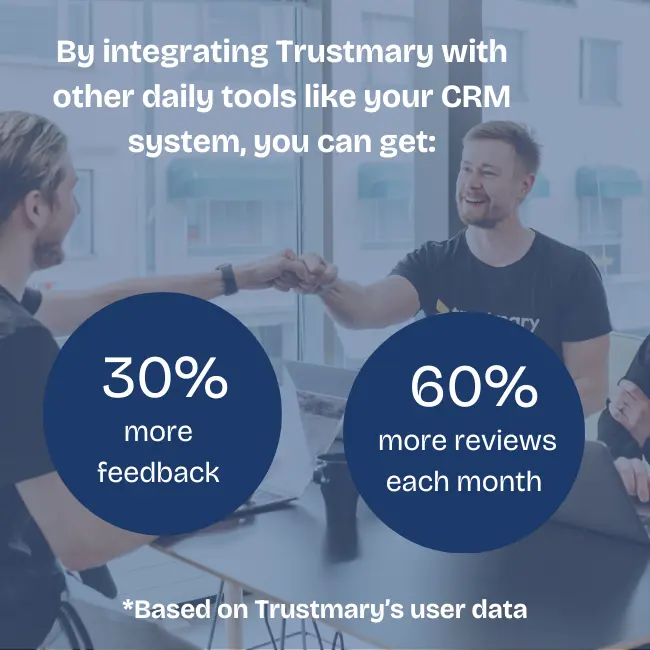
Integrations play a bigger role than you'd think. Trustmary's research revealed that integrations boost your feedback collection process by 67%.
Social Proof from Other Users
Before you commit, check what real users are saying.
User reviews offer insight into:
- Ease of use
- Customer support quality
- Reliability of the platform
- Whether the tool delivers real ROI
Look for third-party reviews or testimonials to get an honest snapshot of what to expect.
Choose the Right Tool for You
When it comes to reputation management, authenticity is key. It's not about hiding negative feedback but demonstrating a commitment to resolving issues and serving your customers.
Each review management tool we've discussed offers its own approach. Some may offer free trials, while others may not.
Consider your needs for improving online review management, then choose the solution that's right for you! Or go all out by implementing customer experience technology into your customer journey.


