
Customer Advocacy: Top Strategies, Examples, and Expert Opinions


I’d like to see customer experience as a tree you should nurture and grow for years. And I’d like to see “customer advocacy” as the fruit of that tree.
Let me explain.
Customer advocacy is everything you could hope for from all your customer experience initiatives from customer feedback to customer reviews and customer referrals.
Not only will you acquire enthusiastic customers that love your product and can’t stop raving about it (hello organic word-of-mouth marketing!), but you will also tap into the most genuine source of customer feedback, which is otherwise very difficult to get.
And don’t tell me any of these are easy for you to achieve because research shows it’s not (see our guide below).
So this guide is for you if you’re interested in knowing more about:
- what customer advocacy means;
- our 7-step customer advocacy framework;
- the most successful examples of customer advocacy programs;
- a few top tools for your customer advocacy program;
- and some actual expert tips for customer advocacy.
What does customer advocacy mean?
Customer advocacy is a CX strategy that aims to turn customers into brand advocates.
In a customer advocacy program, brands prioritize customer satisfaction by creating positive and memorable experiences. And then they encourage customers to share their experiences with other consumers (in the form of recommendations, referrals, or community engagement), and the brand itself (feedback, reviews, testimonials, prototype testing).
Turning customers into brand advocates could have many benefits for brands. The two most prominent benefits are:
- Advocates share genuine feedback so that brands can improve their products and provide better customer experiences.
- Advocates tend to share their positive experience with others (especially friends and families), connect with like-minded enthusiasts, and promote the brand organically.

Why should you invest in customer advocacy?
Here are a few reasons why you should invest in a customer advocacy program.
It improves product quality and customer experience
Advocates care about your product, use it frequently, and want it to keep improving. They connect with other peers, share their personal experiences and use cases, discuss features, analyze issues, and come up with better solutions.
This is important because getting genuine feedback from customers has become increasingly difficult. A peer-reviewed study shows that unhappy customers are unlikely to share their opinions with brands. And even if you try to survey customers, the majority won’t even respond. The ones that do tend to be positive.
Advocacy activities such as user forums and communities, customer advisory boards, and peer support groups are all goldmines for understanding customer needs and concerns. People share their concerns, experiences, and insights freely there, and you can use them to improve your products and enhance customer experience.
It’s a powerful word-of-mouth customer acquisition strategy
Advocacy programs turn customers into active reviewers and promoters. This is a powerful word-of-mouth strategy that outperforms any other promotional strategy.
When it comes to the influence on purchase intent, customer advocacy is particularly effective. Research shows that consumers are more influenced by recommendations from friends and family rather than other sources (such as advertisements and social media). 50% of US respondents considered “friends and family” as their first source of influence.
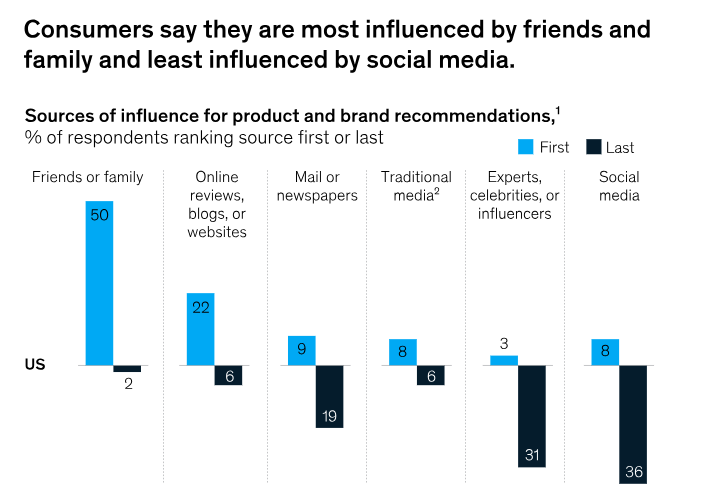
(Source: McKinsey)
It’s an effective retention and loyalty strategy
According to a survey, 86% of buyers would pay more for a great customer experience. However, Forrester's 2025 Global Customer Experience Index shows that the CX index for 20% of brands they had been analyzing for years has declined, and only 6% of those brands have seen improvements in their CX.
In a customer advocacy program, brands keep their customers engaged through communities, private access to courses and new product features, and priority support. And this has a strong effect on customer retention and loyalty.
As Ioana Sima, Marketing Manager at Textmagic explains:
“Advocacy transforms the customer relationship from transactional to collaborative. Engaged customers don’t just use your product or service; they help shape its continuous evolution. The feedback loop created through advocacy programs is invaluable for innovation, because it reflects what customers truly need rather than what brands assume they want.”
Ioana Sima, Marketing Manager, Textmagic
The 7-step Customer Advocacy Program Framework
Here’s our 7-step customer advocacy program framework.
1. Prioritize genuine customer experiences
At the core of a customer advocacy program is the idea of making requests. You ask people to join your advocacy program and spend time to give you feedback, be your case study, refer new customers to you, or any other requests you have from them.
Now this might sound transactional, as if your customers should always be on the alert to respond to your requests. After a while, they might opt out of your program because they don’t find your incentive appealing enough.
This is where genuine customer experiences shine the most. A customer advocacy program that is based on genuine human interactions and customer experiences does not feel transactional.
So the first step in designing an effective customer advocacy program is providing genuine, positive, and memorable customer experiences throughout the customer journey. This approach mirrors the principles used in coaching and mentoring, where meaningful relationships and trust drive deeper engagement and sustained participation.
2. Determine the goal of the program
Businesses interested in customer advocacy programs typically have the following goals (or advocacy activities) in mind:
- They need customer testimonials or reviews
- They need customer case studies
- They need early adopters of a product prototype
- They’re interested in co-marketing activities (e.g. brand partnerships)
- They’re interested in upsells and cross-sells
- They need more customer referrals.
Before you start your program, make sure you have a clear picture of what you’re after with your referral program. This, to a large degree, determines how your advocacy program should look and who should join it.
3. Set the right incentives
It’s tempting to think that people would join your advocacy program because they love your brand. It might happen, and I’m not denying it. But the percentage of this ideal cohort of your customers is probably not that large. So you need to consider some sort of an incentive for people to join your advocacy program. Think of these incentives more as recognition and appreciation rather than bribing.
Now these incentives don’t need to be monetary or physical. In fact, you might want to stay away from monetary incentives because people may participate only for rewards, not because they care about your brand. These profit-seeking advocates rarely stay around for long.
Depending on your purpose behind your advocacy program, you could think of any of these incentives:
| Recognition | Being acknowledged publicly with titles, awards, badges, or spotlights. |
| Special access | Special access to early features, VIP events, insider updates, or roadmap previews. |
| Influence | Opportunities to shape the product or brand through feedback groups, betas, or advisory boards. |
| Community | Connecting with peers, sharing knowledge, and belonging to a like-minded group. |
| Education and skill-building | Growing expertise through training, certifications, workshops, and learning sessions. |
| Personal branding and career growth | Visibility that enhances the advocate’s reputation (speaking opportunities, case studies, expert contributions). |
| Exclusive experiences | Unique or memorable experiences that feel special or premium. |
| Rewards and perks | Light incentives such as points, discounts, or small gifts as appreciation. |
4. Identify potential candidates
Once you have a good understanding of what your advocate program is going to achieve, you need to start by identifying potential advocates. It makes sense that you start with customers who are already highly engaged with your brand.
Look into your customer base and identify the people who:
- Have been with you for a long time (loyal customer) or have made many purchases. (Check your CRM or billing system to find customers who have stayed with you the longest or made the most purchases.)
- Are they talking frequently about you on social media. (Use social listening tools or simple searches to see who frequently posts positive sentiments about your brand.)
- Have already given you positive reviews or testimonials, or have done a case study with you. (Look at third-party review platforms and your own marketing assets to find customers who have already publicly supported you.)
- Have already sent you referrals. (Check your referral program data or ask sales which customers have introduced new customers to you.)
- Are highly engaged with your marketing material. (Review email analytics and event attendance data to identify customers who consistently open, click, and participate.)
- Rank high as your NPS promoters. (Pull your latest NPS results and reach out to all customers who gave you a 9 or 10.)
Before you start your program, reach out to some of these people and ask for their feedback. Simple pulse survey tools can do wonders here. Or you can schedule a call with them and explain the details of your program and what benefits they’ll get from it. Then fine-tune your program based on their feedback.
4.1. Customer advocacy persona framework
Another important factor to consider when reaching out to people is their personality differences. Rik Luttmer from Loyalty Chiefs has devised a model for optimizing advocacy programs based on customers’ personality differences called “The Customer Advocacy Persona Framework.”
According to this model, the first – and most critical – strategic step in devising an effective customer advocacy program is to understand the individual human dynamics that drive an advocate's willingness and preferred type of participation.
The key to unlocking this potential lies in segmenting based on two fundamental human pillars: why a person shares (their core motivation) and how they prefer to express themselves (their personality and preferred advocacy behaviour).
So this model consists of two core axes:
- The 'Why' Axis (Motivation): defines the internal reason an advocate chooses to participate (their core drive or purpose):
- Intrinsic Motivation
Their advocacy is self-driven and rooted in values, purpose, and internal satisfaction rather than external incentives. - Extrinsic Motivation
This motivation type works best when participation provides tangible benefits, such as exclusive access, public acknowledgment, or material rewards.
- Intrinsic Motivation
- The 'How' Axis (Expressiveness): defines how an advocate prefers to communicate and engage (their comfort with visibility and their natural communication style):
- Introverted
These advocates prefer selective, thoughtful engagement and often communicate best in private or one-to-one settings. Their influence tends to come through detailed reviews, private feedback, or personal referrals. - Ambiverted
These advocates shift their communication style based on context. They are equally comfortable contributing privately or sharing publicly when appropriate. - Extraverted
These advocates are energized by social visibility and public interaction. They do best in formats like video testimonials, live discussions, or broad social promotion.
- Introverted
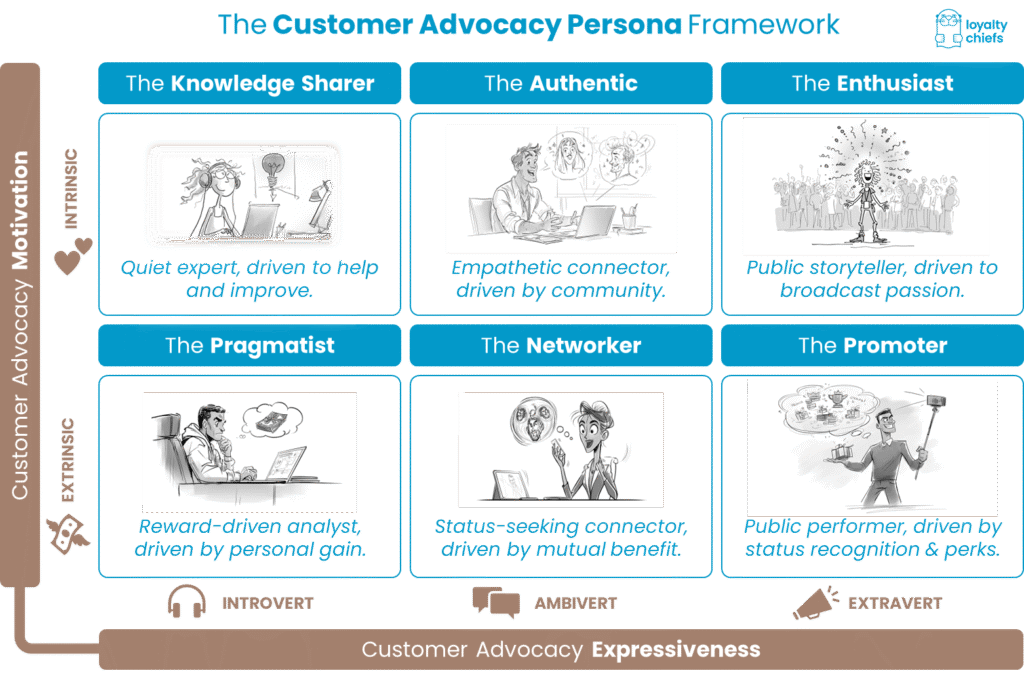
This model helps you create laser-focused campaigns based on your customers’ core drivers and preferred communication styles.
5. Validate and invite potential candidates
Roll out your advocacy program to a select group of highly engaged customers. Send a warm, personal note that acknowledges their loyalty and explains why they were selected for the program. You can reach out via email, social media, or even a quick call.
These are some tips for your invitation message:
- Explain the purpose of the program. Tell them the program is designed to celebrate customers, and invite them to help shape the future of the product.
- Highlight what’s in it for them. Make it personal by matching the benefits to what each advocate cares about, so they immediately see why joining the program is valuable for them.
- Be very clear about expectations. Tell them what participation looks like so it doesn’t feel like a big commitment.
- Give them one simple next step. A reply to the email, a quick calendar link, a short form, an invitation button. No friction, no pressure.
- Let them know they’re part of a small, special group. This sense of exclusivity makes the invitation feel special and encourages them to join because they know not everyone gets the same opportunity.
6. Retain and grow your advocates
The next step is how to keep running your advocacy program sustainably without burning out your advocates. So you need to have a strategy in these three areas:
- How to keep advocates engaged
- How to graduate or rotate them
- How to prevent fatigue and burnout
Here are a few tips for retaining and growing your advocacy program:
- Celebrate milestones
Celebrate each meaningful contribution, like a review or referral. Small recognitions make advocates feel valued and encourage them to stay active.
- Rotate opportunities
Don’t rely on the same advocates for every request. Spread opportunities evenly to prevent fatigue and build a broader, engaged group.
- Provide ongoing value
Offer regular value, such as early access or exclusive sessions. These perks remind advocates why the program is worth their time.
- Send personal follow-ups
Check in with advocates once or twice a year. Quick personal messages show you care about their experience, not just their output.
- Graduation or alumni stage
Allow advocates to step back when needed. An alumni stage keeps the relationship positive and leaves room for future engagement.
7. Measure the program’s results
The scariest part of running a customer advocacy program is when you try to measure its results and compare its costs with its benefits. You can’t skip this part if you want to continue receiving buy-in from management.
Record all the outcomes that could be associated with your advocacy program. They include
- the number of referrals and the revenue your advocates bring in,
- how many reference calls your advocates participate in and the deals they help close,
- new reviews and case studies they contribute,
- any upsells or renewals from advocate accounts.
Also, don’t forget to consider churn prevention and product improvements driven by your advocates’ feedback to understand the full impact of the program.
Then run the (estimate) profit generated by these outcomes against the costs of running the advocacy program.
Some of these costs might be costs for software platforms, staff to manage the program, rewards or perks for participants, content creation like case studies or videos, and occasional event or community expenses, with the total cost varying based on the program’s size and complexity.
4 real-world customer advocacy examples
Let’s look at some of the most successful examples of customer advocacy programs.
1. Autodesk’s Expert Elite Program
The Expert Elite Program is an advocacy program by Autodesk that recognizes customers who actively support the Autodesk user community by sharing their expertise through their various advocacy channels (Autodesk forums, Autodesk Knowledge Network, online sites and social channels).

As part of the program, advocates receive benefits like:
- Recognition (badges, certificates, “Expert Elite” labeling)
- Rewards: discounts to Autodesk events, access to Autodesk software products, online learning programs, and other perks for professional growth.
- Connection: access to a private community of Expert Elites, invitation-only events, and direct interaction with Autodesk teams.
2. Cisco’s Insider Program
Cisco’s Insider Program is an overarching initiative that includes Cisco’s advocacy, loyalty, and research programs. The main concept behind this initiative is to connect people who share a passion for Cisco.
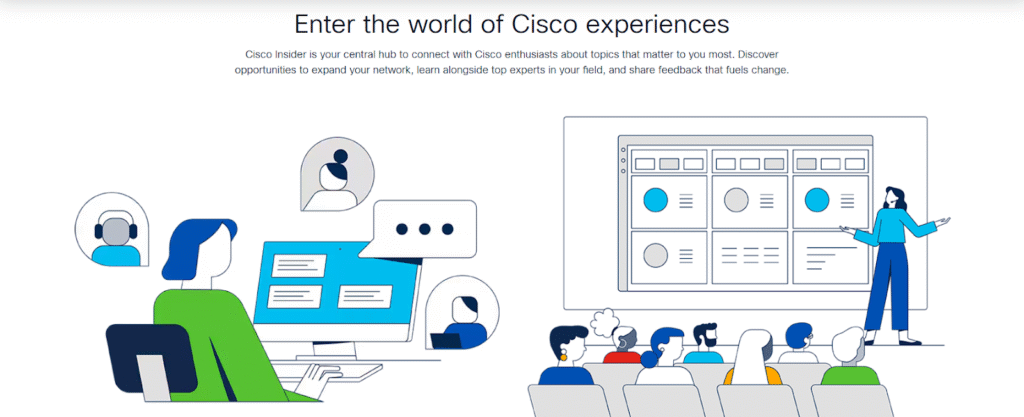
In particular, the initiative includes four programs:
- Advocacy: a global network of customers and partners where they build connections, access industry news, and engage in case studies, testimonials, and speaking opportunities.
- Champions: designed for technical influencers to talk about the future of technology, engage with Cisco experts via beta tests, and grow their professional network.
- User Group: a private forum of experienced users who share best practices around Cisco technologies.
- User Research: a program that invites participants to shape Cisco’s future products and experiences via research opportunities most relevant to their role and business.
3. CVENT Celebrity Program
CVENT Celebrity is a customer advocacy program that invites event planners, marketers, and venue professionals who are active users of Cvent to join a community of advocates.
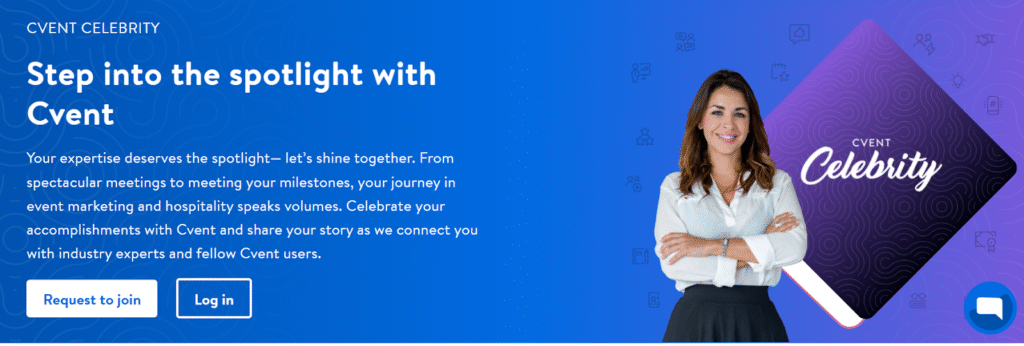
These are the incentives of the program according to their website:
- Earn and redeem: earn points for every activity they complete and redeem them for branded gift cards, swag, event passes, and more.
- Give back: earn points but choose to donate them to charity.
- Experience only: gain the knowledge, connections, and professional opportunities.
4. Asana’s Ambassador Program
Asana Ambassador Program is an advocacy program designed for team leaders, product experts, and active Asana users who want to champion Asana.
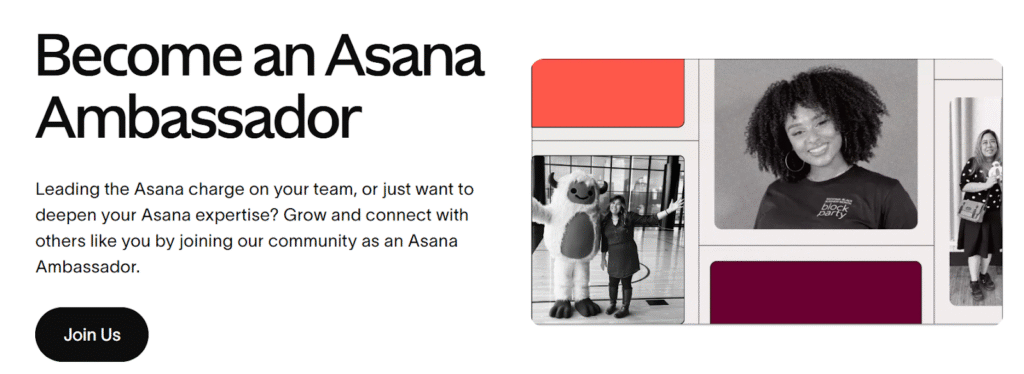
To join the program, you need to pass two courses: Asana Foundations Skill Badge, and the Ambassador Orientation course.
Once you join their ambassador program, you get the following advantages:
- A special Forum badge that gives you access to the private Ambassador forum and product updates.
- Invitations to private webinars, talks, and workshops.
- Guest access to Asanaverse, a Community Resource Hub, inside Asana.
- Get access to their community swag store.
Best customer advocacy tools
The right tools make a huge difference in a customer advocacy program. They centralize, automate, and measure the processes involved in identifying, engaging, and supporting your advocates.
1. Trustmary
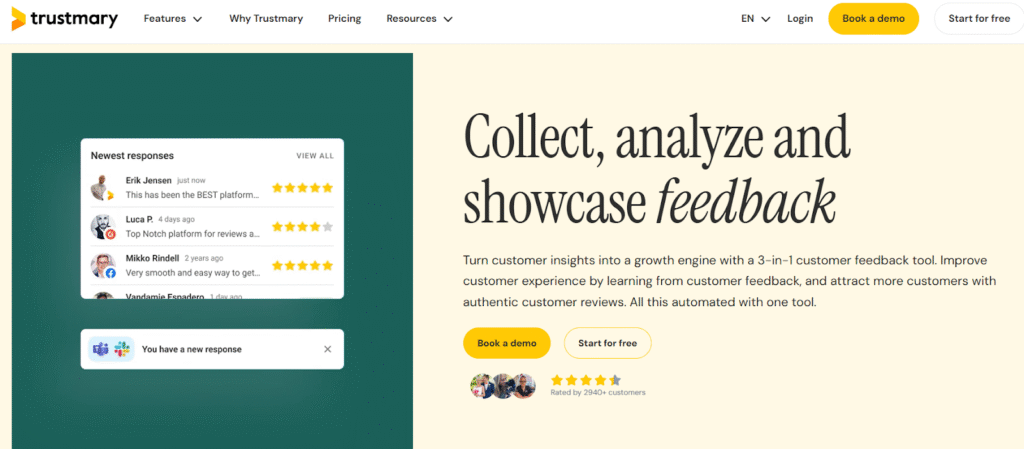
Trustmary is a tool for collecting, managing, and showcasing customer feedback, reviews, and testimonials. It has strong customer feedback features that could help your advocacy program.
Here’s an overview of Trustmary’s features:
Feedback and review collection: it provides automated surveys that capture customer satisfaction metrics, feedback, and reviews all in one (“3-in-1 surveys”).
Analysis and insights: it uses AI to analyze feedback and reviews, and extract meaningful insights.
Showcasing social proof: Trustmary allows you to display reviews and testimonials on your website via its widgets.
Integrations and automation: The platform connects with CRMs, websites, and third-party review platforms to automate feedback collection.
2. HigherLogic
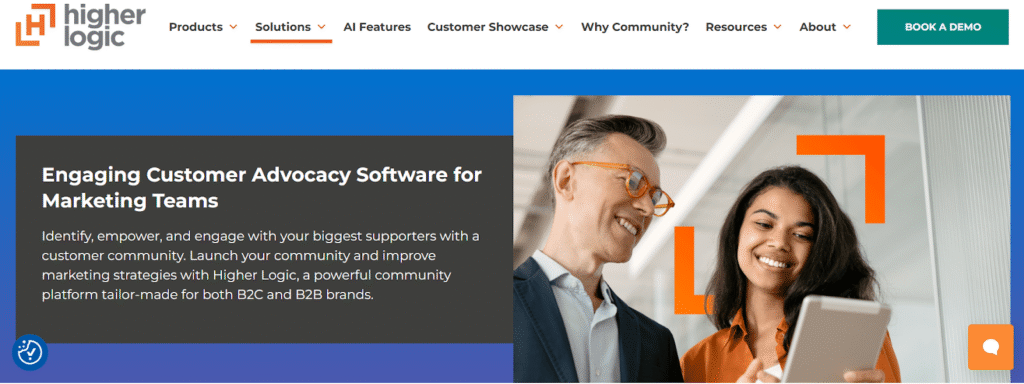
HigherLogic is a customer engagement platform focused on community-driven advocacy. The platform offers tools for customer engagement, gamification, and community interaction to turn satisfied customers into advocates.
Here’s an overview of HigherLogic’s features:
- Gamification and rewards: leaderboards, polls, and other tools to engage users and identify advocates.
- Integrations with CRM and marketing tools: Seamless connections to sales and marketing systems like Salesforce or HubSpot or its alternatives.
- Feedback collection: collect customer stories, feedback and testimonials.
- Engagement analytics and behavior tracking: insights into user behavior in the community to spot advocacy potential and monitor the program’s efficacy.
3. Tapfilliate
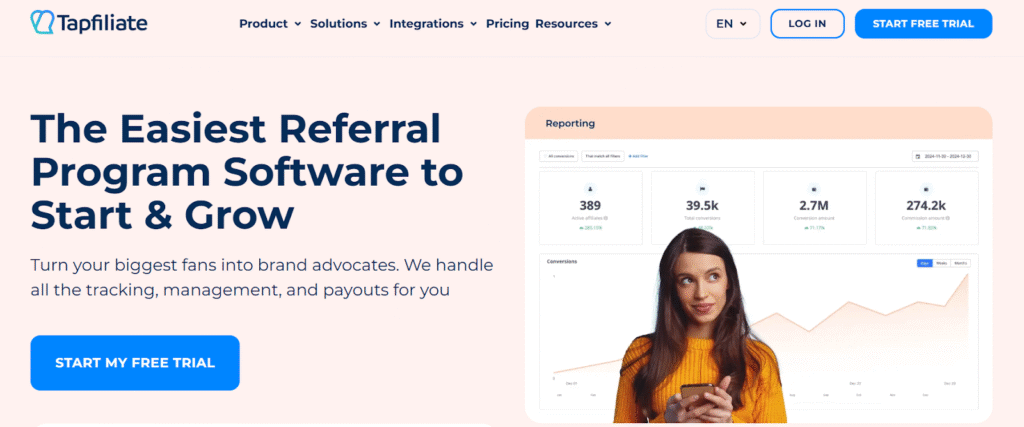
Tapfiliate is an affiliate and referral tracking software that helps businesses create, launch, track, and scale their partner programs. Although this is not a full customer advocate platform, its referral and partnership management features can help your advocacy program a lot.
Here’s an overview of Tapfiliate’s features:
- Automated invitations: set up systems so that customers or other prospects are invited to become advocates or affiliates via referral codes.
- Unique referral links and coupon codes: enables advocates to share branded links with their networks and receive credit for conversions.
- Real-time analytics and tracking: track clicks, conversions, and revenue attributed to advocates.
- Multiple integrations: integrates with major ecommerce platforms, payment systems, CRMs, and automation tools to track referrals and streamline program management.
4. Maestra
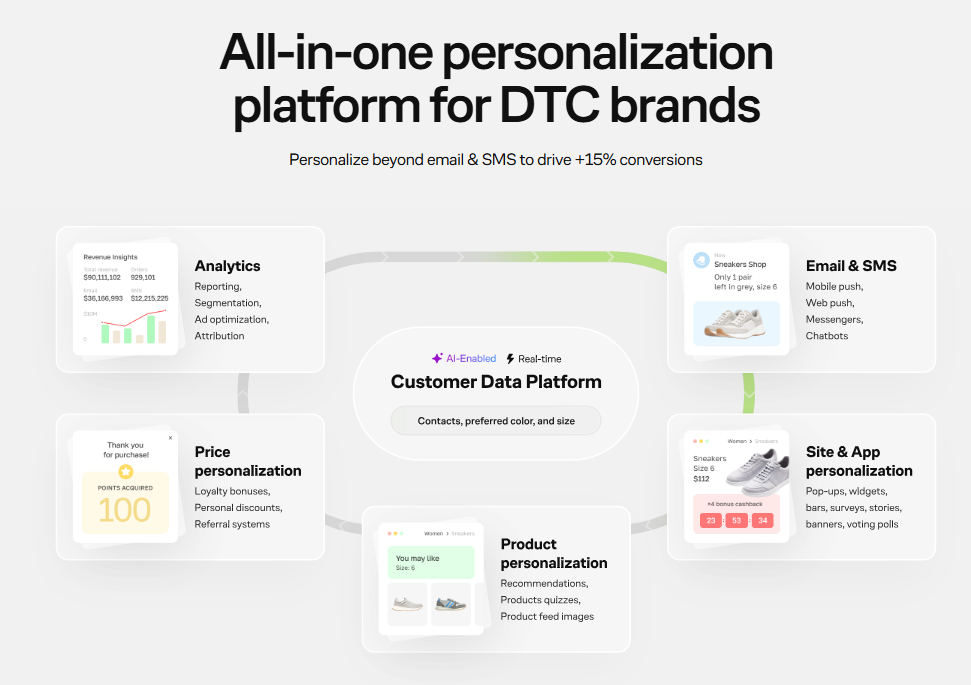
Maestra is a unified personalization and loyalty platform built especially for DTC brands. It integrates customer data, loyalty programs, and referrals in one system. This enables businesses to deliver personalized experiences across multiple channels and reward customers for meaningful actions.
Here’s an overview of Maestra’s features:
- Referral programs: you can issue unique referral links or codes and reward both the referrer and the referee.
- Loyalty tiers, points, discounts, gift cards: layered reward mechanism that can incentivize customer advocates.
- Omnichannel integrations: with websites, emails, SMS, mobile, and other channels.
- Analytics: keep track of activities (referrals, actions) so you can see what your advocates are doing.
What experts say about customer advocacy
Nothing beats expert opinion when it comes to the nooks and crannies of customer advocacy. So I’ve reached out to a few and asked their opinions about it.
Martina Lipp, Marketing Consultant, Loyalty Specialist, and Advisor

From my experience refer-a-friend (RAF) consistently proves to be one of the most effective advocacy levers, that is if you get the timing, targeting and offer strategy right.
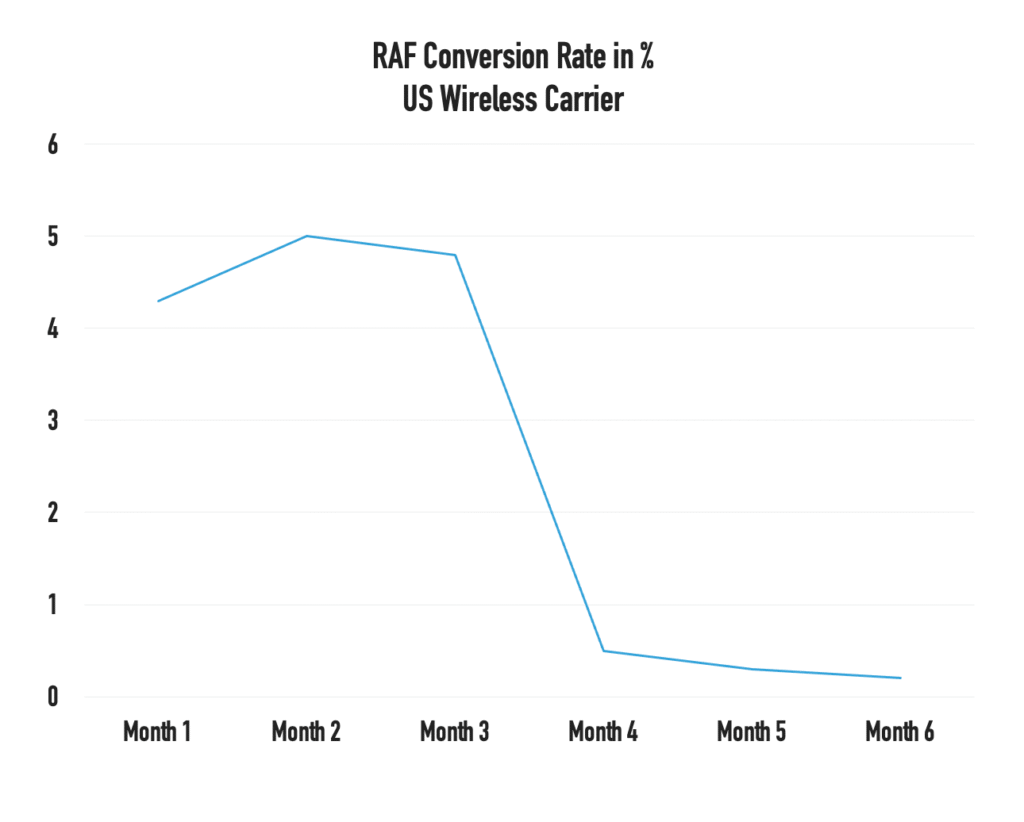
At a U.S. wireless carrier, we discovered through extensive experimentation that new customers (both prepaid and contract) are most willing to refer within the first three months (with another smaller peak after contract renewal). That is because in this period, the initial onboarding is complete, excitement is still high, and the product is top-of-mind. After month three, referral likelihood didn’t just decline... it dropped by roughly 80-90%, making referral prompts dramatically less effective.
Incentive structure is another major conversion driver. Programs that reward both the referrer and the new customer consistently outperform single-sided rewards. Incentives don’t always need to be monetary - exclusive access or free products can also be very effective - but there is always a point where increasing the reward value only delivers minimal or no incremental lift.
Finding that incentive ‘sweet spot’ - for both the referrer and the new customer - is essential to maximizing the ROI of your RAF program.
And one universal insight: the new-customer incentive must be more compelling than any offer that is already available out in the market.
I have seen similar patterns for RAF across various industries - from coffee machines to subscription products - but every company should run tests to identify the optimal approach for their customer base. Then RAF can be built directly into the customer lifecycle journey as a steady, cost-efficient acquisition engine.
Reviews are another powerful path to advocacy. At Dollar Shave Club, a razor subscription service in the US, we learned that asking for reviews within the first one to three months generates the highest conversion rates and the most authentic feedback.
At this point customers have formed an opinion, but are still engaged enough to share it. One surprising (yet intuitive) observation was that excessively positive reviews actually triggered skepticism in potential customers. To increase trust and conversion, we had to make sure we had a representative mix of genuine sentiment, which also means the occasional less-than-perfect review.
So remember: No single tactic is a silver bullet, but when timing, incentives, and targeting all align, customer advocacy becomes a sustainable engine for growth.
Jordie van Rijn – email marketing consultant and the founder of Emailvendorselection.com

The challenge a brand faces these days is not just how to get attention, but how to create a lasting memory or experience that customers would like to share. In a recommendation, review, referral, or other type of community engagement.
I remember for a vacation we were in Istanbul, and at the end of the dinner at the restaurant, the waiter had a special treat + fun picture in his "traditional" headwear. Hilarious and of course, super touristy. But that picture is certainly going to be shared and so each and every day they have people sharing their restaurant experience and talking about it. It is a memory you won't quickly forget.
Just mentioning there is an option to refer or share can already stimulate it. An extremely easy way for instance, is just adding a block at the bottom of your email newsletter: "Received this mail from a colleague? Sign up here."
Yes, a referral program can also help grow your email list, increase awareness and will lead to more people sharing your emails :D. Because if your product doesn't lend itself to direct product referrals, it can lend itself to leads or marketing referrals.
Finally:
It can’t be stressed enough that customer advocacy is effective only when it’s rooted in genuine positive customer experiences during the entire customer journey. The main function of a customer advocacy program is providing the tools and incentives to benefit from these positive experiences.
So invest in customer experience and follow our 7-step customer advocacy framework to get the most out of your customer advocacy program.


